Categories
Categories
pakenevia näkyjä
Categories
talvimato

Categories
people at the service of things
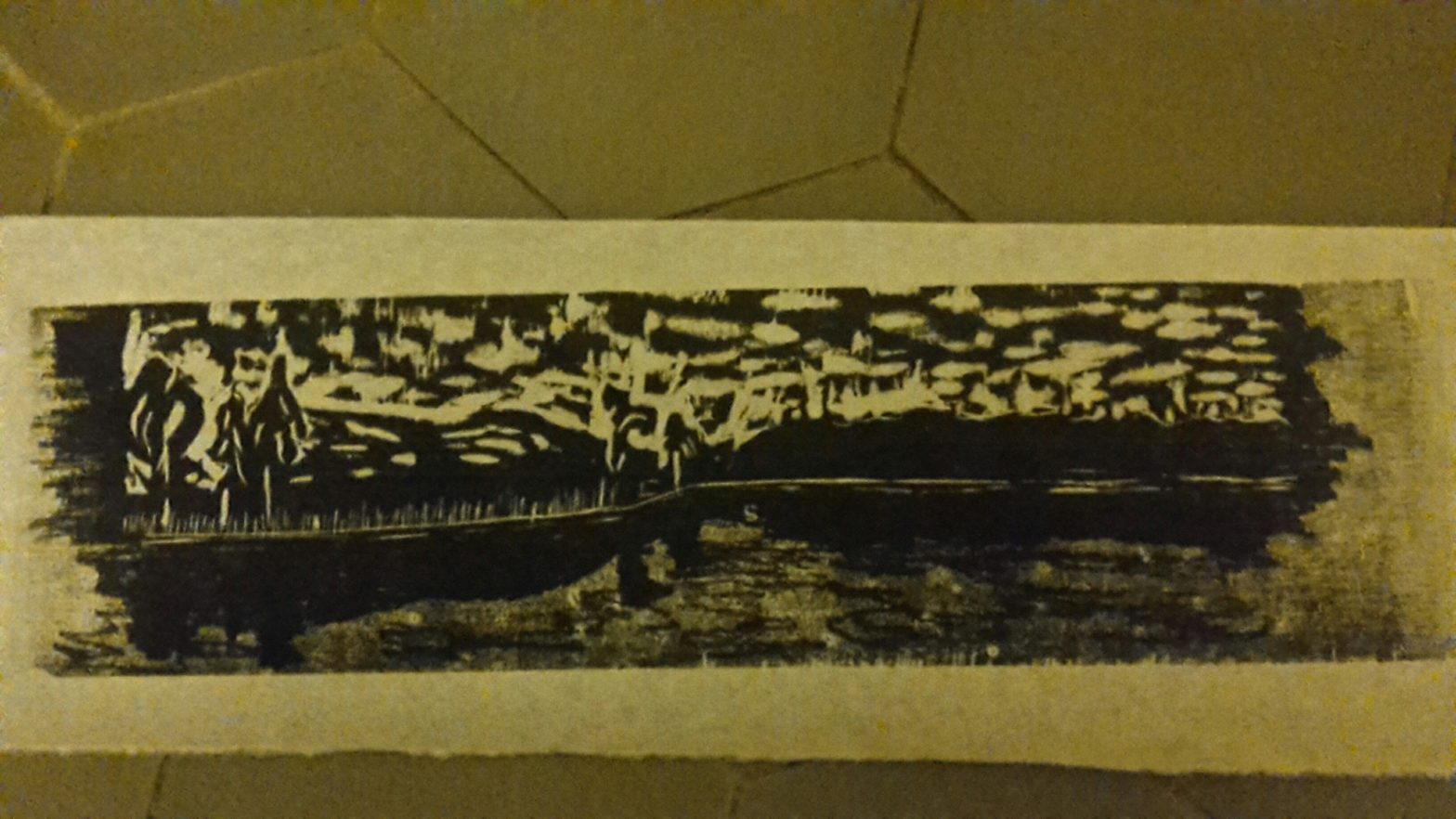
people at the service of things was a free improvisation trio. Using people and things, over a period of two years we played and performed at different venues in Cardiff. The following recordings are edited from sessions that took place during the summer and autumn 2007. At least one track on the album is performed in front of an audience, and at least one includes a contribution from the dancer, Tanja Raman. ‘Things’ include: piano, record player, contact mics, surfaces, filterbank, spring reverb, live sampler, and a mixer to feed those things into each other.

Written in the midst of panic: the absence of collective dreaming
(yerevan, dec 2016)

We are faced with the biggest possible challenge and, as a human collective, seem unable to act, or even to acknowledge this. What is it that is stopping us from facing this problem: Why are we diverting our mental focus from accepting the state of affairs and disabling our desire or ability to take preventive action – or even from readying ourselves and our structures and institutions to the changed world.
True enough, it’s a trick of the brain: it is too big and scary and, to a certain extent, looming too far in the future to be tangible (at least in the privileged world). But there is more to this lack of response: it seems that some skills or mental attributes are not honed or practiced widely enough for groups of people to work as problem solving units for something so terrifying and complex.
Namely, for me it would seem, we are lacking three characteristics collectively and individually: desire to let the human story to carry on unfolding after we have gone (or even during); courage to look head on at the fact and admit the gravity of the situation; imagination to dream of the solutions, of things to become, of ways to be.
With the Trump victory I woke up to the realisation that perhaps many people just don’t care that we are about to perish, or even about how we are going to do it: they are so sick of their own lives, everything is so boring and meaningless that they are ready to let it all slip, and like an extremely bitter person afflicted with a terminal illness, want everyone to come down with them. This lack of desire might be particularly true of the ruling class. There is nothing enticing left for them, all their needs have been oversaturated, they are in a mental state untouched by awe, inspiration, curiosit
y, or the pleasures stemming from sharing or resistance.
What about courage: for a long time I didn’t dare to look at the state of the world, or I looked at it but the knowledge of it paralyzed me. Catch-22: either you don’t look at it and stay passive, or look at it but get incapacitated by the scale and speed of it. I wanted to write about the things that would empower us into research and action; where and how to find courage…but obviously I became so defeated by fear that I didn’t feel like it was worth the effort. Nothing mounts to anything. And there are no clear channels for how people can act, so what’s the point of looking at the horrors of the world and just worrying yourself sick. But, in order to form some clear analysis, look we must. And once we have looked we might need to act with ways that again entail risk taking. How do we hone the courage in ourselves and others?

As for imagination: we are asked to imagine an outcome that is in the realm of impossible. And in the process we are potentially also giving up a lot and a vigorous collective imagination is required in order to create something in its place. There are some vital fields that so far have hardly been approached as creative platforms, for example human processes of decision making and interconnection, to name a few.
In my own mental struggle to face the state of the world I have pretended to be terminally ill and learned to live with it. The inconsolable sorrow people feel with the destruction of earth is obviously only a small part of the trouble. Nevertheless, it is far too often overlooked, leaving us without tools to deal with our growing desolation. I’m also trying to acknowledge that it is no longer about stopping this chaos: as well as about mentally coping it is also about affecting how we go, who is damaged and how. Accepting it not as a future thing but as something that is here and now, clearly already happening in places like Syria and Afghanistan. What does “decent survival” entail in the coming age of mass migration?
So, this is what I try to do: I’ve acknowledged that it’s happening. I’ve accepted a life with the resulting panic and anxiety, the constant deep sorrow that results from the speed and force of climate chaos and its human cost as well as its general annihilation of life. It’s the spirit of these times, maybe a necessary mind set, particularly if you see the rising totalitarianism as a response to scarcity. Perhaps sometimes carrying this sorrow requires a courage to be helpless, hopeless, and in need of support.
When living under tyranny we are advised to remember that the future exists – is this still the case when it seems like it has ceased to exist? At times, I passively await for the impossible. At times, I can only try to feed my own ability to dream and pass on the dream: ‘survival as the passing on of ideas, dreams’. And in my small way, to reinforce things that build communities, their ability to resist, minimize the damage to those of us who least deserve it (“those who fear for life rather than those who are just anxious”), preserving something gentle and human and just. Keep on the flame of desire to live and create a livable environment; find practices that hone courage without heroism (that is the antithesis of collective forms in its denial of support network at work behind individual deeds).
I was hoping, some years ago, that we would develop the human mental capacities to recognize as a threat something that is looming in the future. This is not anymore necessary when the threat is here, the consequences are lived by millions daily as a near impossible struggle to maintain some kind of sanity and find resources for living, eating and staying warm. And for those of us, in the privileged position not to have to be preoccupied by this daily survival, it might sometimes be a question of action as therapy, however futile, or else we mentally perish.
What we are seeking is a renewed collective effort to map out and exercise the responses that facilitate courage, imagination and desire in order to face the horrors here and now, the sinister mechanisms, the complexities of reality we face. Are we asked to believe in the impossible future? (After all, people were already asked to do this, for example, in the Calais-jungles; find sharing where resources were sparse, defend or at least protect themselves against a destruction machine in CRS-uniforms, find some reason to dance or smile…) We remind ourselves that even if it is clear that we are heading to the void, it is still to a small extent negotiable how we go. There are plenty of less- than-determined outcomes. Some of us can still be ambitious about our lived experience and that will feed our social intuition, our resourcefulness…and in the process find new allies, interconnections. Finally, this resistance is not just for some selected few who are living perfectly. Success becomes something that you attempt in the field of connection.
And perhaps, just perhaps, there is this longing on a larger scale that could still make history happen. True enough, it would appear that it is still valid what someone has said: people are readier to see the end of the world than the end of capitalism – despite the nowadays widely recognized fact that the idea of constant growth is necessarily at odds with the earth’s finite resources. However, since we have been living in a culture that undermines coping our collaborative potential has been largely dormant. Perhaps the current system breakdowns – cracks – will lead to people acting as a problem solving unit, as long as we create the necessary platforms for nurturing our collective capacities. Meanwhile, in the pursuit of connections…
Categories
Foreword
To Dear Friends,
Particularly old ones but why not new ones too,
This little writing process of observations or stories from my non-linear paths is an effort to extend my arms towards you. I want to share some words in order to reach out and contribute. You may read it or not, at your own free will.
However, this is strictly for friends only. This is for you who are not quick to judge, who give space for misunderstandings or shortcomings in our understanding of each other. This is for you who don’t, at every turn and without dialogue, suspect your dear fellows of tricks aimed at putting you down or at elevating themselves into heroes. This is for you who also are, or have been, utterly lost and foolish – following, for example, the cliched old advice “have your dreams as your compass” and naturally ended up in ever confusing circles. Finally, this is for those of you who are ambitious in the field of human relations.
The purpose of my writing to you is many-fold. Firstly, I’d like this to be a love letter: I want to write you an ode; I want to create private rituals that you can participate in (or not, if you don’t want to or you have more pressing matters at hand in the storms of the real world) so that we can share paths despite the distances and very rare chances of meeting up. I wish that we may remain intensely present although painfully far from each other; I want to break the partial isolation (although it is of my own choice and a great privilege in itself) and still keep on being part of your tumultuous worlds while taking a deep breath in solitude; I want to celebrate the strong network that we can be, whilst we are utterly exposed and vulnerable in each other’s hands. Finally, I want to acknowledge that all my “good fortune” depends on, as well as sheer luck, this collective force of our care networks.
The work-in-progress name of my tentative ramblings is called Melancholy of Resistance (borrowed title from László Krasznahorkai’s novel). It consists of rants or vignettes from “my days and roads”, particularly searching for expressions of desire, imagination and courage, or the lack of them. It is a rather selfish “project” developing from a need to cope with a certain devastating panic that arises from thinking about our past and future as well as the state of the wider world, particularly of haunted corners of my roads, such as Afghanistan. Along the way i am trying to, at times, get over this incapacitating anxiety by celebrating, for example, the joys of collective decision making or improvisation. And I wonder sometimes: What value do experiences have if they are never told to anyone – or even, did they really happen at all?
My mind, like so many others, has also been occupied of late by the question of what is the “military hospital” that we need to create for ourselves and the others whom we care about, or who care about common humanity. How to be it? How to find the resilience without losing the ability to be gentle?
So, this arm I’m extending: is it a helping hand, or a hand reaching for help? Or are they the very same thing in the end of the day?
As Paiemaida, my wise young tent mate from the Calais jungle would say: “Ko ba ko na-merasa, Adam ba Adam merasa“ – “a mountain does not reach out to a mountain, but a human reaches out to a human”.